What is the SAFe® Dual Operating Model?

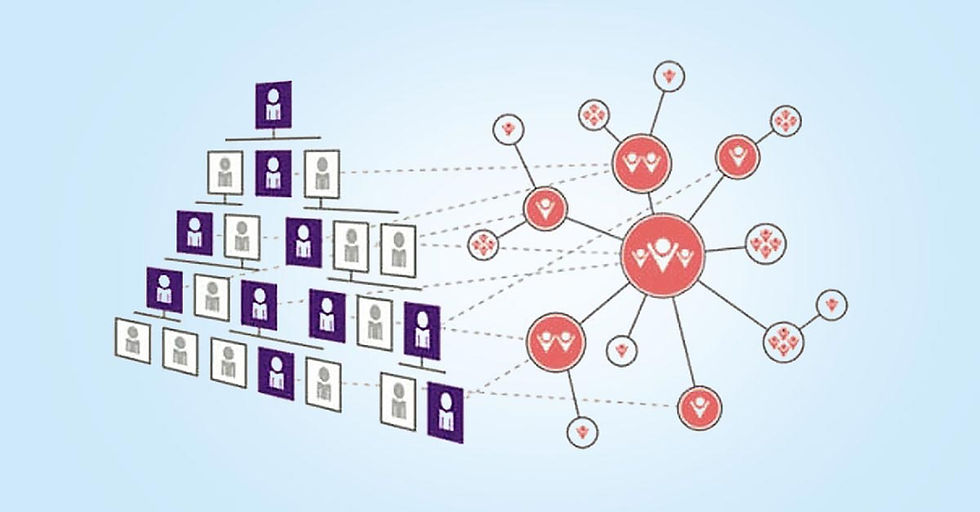
One of the great thinkers of our time in relation to organisational agility is John Kotter. Kotter put forward change models used across the world. Organisations, large and small, use his ideas to transform.
One concept that Kotter proposed was the dual operating model. Some see this as controversial.
The Dual Operating Model is a fundamental principle of SAFe®. In particular, organising around value. So, it might be good to examine this concept. In particular, why the dual operating model is a powerful tool for organisations, who wish to be agile.
Organisations are usually formed to meet the need of a customer or customers. As such, it is by definition customer focussed. It's structure will reflect that need.
But as organisations grow and age, they need an infrastructure. For example, line management, organisational silos, hierarchies. These provide support and structure. Without them an organisation is a blancmange and will collapse.
But, in forming this structure, organisations ossify. They stop being customer centric. They lose that original alignment to the customers needs.
Kotter, and SAFe® advocate that we can have the best of both worlds. We can create fluid structures that meet the needs of our customers. These willcut across the rigid hierarchical structures, without destroying them. We can begin to achieve business agility and organise around value in a short time.
In SAFe the most often seen customer-aligned structures are Agile Release Trains (ARTS). We also see customer alignment in Value Streams and Portfolios. A key feature of an ART is that reporting lines exist elsewhere. An RTE may coach many Scrum Masters/Team Coaches but does not line manage them. As another example, the team members are not line managed by the Scrum Master or Product Owner.
Critics of this approach cite several concerns.
First; the virtual nature of the customer-aligned structures is a ‘cop-out’. It allows the organisation to avoid the hard work of a true agile restructure.
Second; we must achieve complete alignment to the value stream. To get the full benefit of customer centricity we must commit to it in totality.
Third; the ‘virtual organisation’ is unrealistic. It is a flawed, pollyanna-ish concept. It will not work in the real world and will be always trumped by the hierarchy unless we blow away the hierarchy.
In response, point by point.
A restructure can be a significant obstacle to adoption of agile. It can be costly and time consuming. It can open an organisation up to legal liabilities. It can lead to organisations shedding people. It may disrupt existing in-flight work.
A full organisational restructure is a very high bar and a major commitment. Many senior executives worry about the leap of faith required to begin agile at scale. Let alone commit to a risky and expensive full restructure.
To the second point, there are always silos and tradeoffs. Reorganising around the value stream means that we are now creating new silos. Expertise silos which need to be overcome. Also, we are now creating new power and control relationships. And we are creating them between parties that we are expecting to collaborate.
“How can I argue with my PO if they are my line manager?” is a common example.
We must also be realistic. Reorganising around value streams means committing to a view of value . This view may be wrong, incomplete, and may change over time. What happens when we realise our understanding of our value streams was incorrect? What happens if we wish to respond to market changes or grow out business and establish a new value stream? It is foolish to think we can design 100% correct value streams in our first attempt. It is much more realistic to see them evolve over time, as we learn more.
And to the last point - is it realistic to try a dual operating model? I have myself seen it in the SAFe® world with ARTs and Value Streams. But you do not need to look at the agile world to see the dual operating model working.
In fact, the concept is very old and exists in every single organisation in the form of - projects. A project is a dual operating model. The organisation brings a group of people together, aligned to a customers needs. Their line management usually doesn’t change. The only difference is that projects are temporary. SAFe® advocates you make the structures long lasting. Not tied to a short timeframe and specific, finite scope.
So, in summary, the dual operating model is a key enabler of organisational agility. With the dual operating model we can;
- organise around value without an expensive restructure
- get started without delay
- experiment and evolve over time
- adjust to new or changed value streams
- encourage collaboration by taking line management out of the equation
- leverage the existing value of existing functional and practice managers
- gain the benefit of project style outcome-focussed organisation
- avoid the damaging stop/start nature of constant project reassignment


